
Key takeaways
- Lenders look at four things first: time in business, revenue, credit score and what the money is for.
- The right loan type depends on your timeline. Some online loans fund in days, SBA loans take weeks but cost less.
- Applying to the wrong lender costs you time and can add hard credit pulls. Apply where your profile fits.
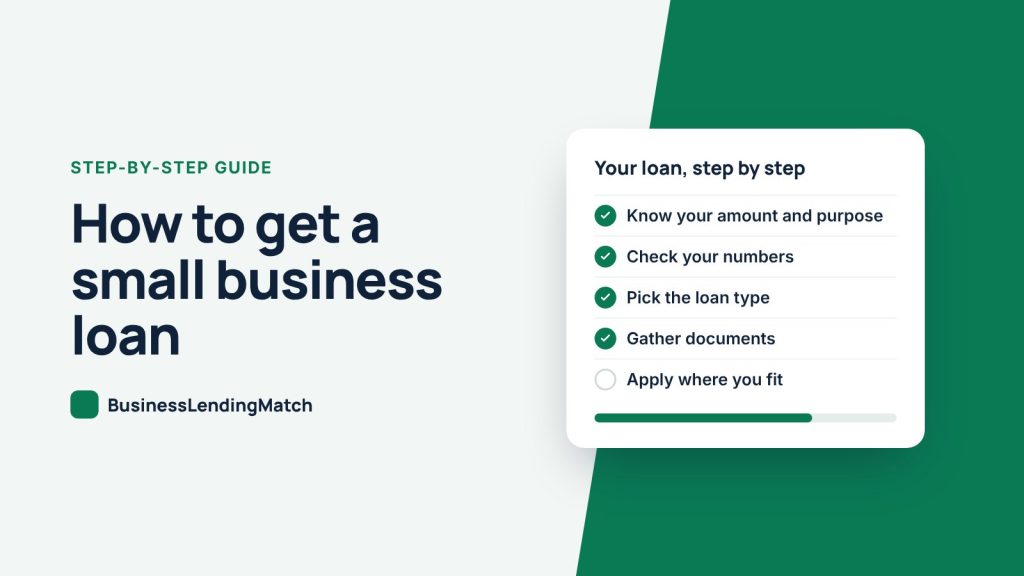
To get a small business loan, you need to know how much you need and why, check the numbers lenders care about (time in business, annual revenue and personal credit), pick the loan type that fits your timeline, gather your documents and apply with a lender whose requirements you meet. This guide walks through each step so you apply once and get a real answer.
Step 1: Decide how much you need and what it is for
Lenders approve a purpose, not just a number. “Working capital for a slow season,” “a second dump truck” and “buying out a partner” each point to a different loan type. Write down the amount, what it pays for and how the money will pay itself back. For example, a new truck that lets you take two more jobs a month.
Ask for what you need, not the most you might qualify for. A smaller, well-explained request is easier to approve and cheaper to repay.
Step 2: Check the numbers lenders look at first
Almost every lender screens on the same four numbers before they read anything else:
| What they check | Typical minimum (online lenders) | Typical minimum (banks and SBA) |
|---|---|---|
| Time in business | 6 months to 1 year | 2 years |
| Annual revenue | $100K to $250K | Enough to cover the payment comfortably |
| Personal credit score | 600 to 625 | 650 to 680 and up |
| Business bank account | Required by most | Required |
These are common ranges, not rules. Every lender sets its own. Banks and SBA lenders also look closely at cash flow: they want your profit to cover the new payment with room to spare, often 1.25 times the payment or more.
Step 3: Pick the loan type that fits
- SBA 7(a) loans: long terms and low rates for established businesses. Slower, more paperwork.
- Term loans: a lump sum repaid over a set term. Good for one-time investments.
- Business lines of credit: draw what you need, pay interest only on what you use. Good for uneven cash flow.
- Equipment financing: the equipment is the collateral, so it is often easier to qualify for.
- Invoice factoring: get paid now on invoices your customers owe you.
- Working capital loans: short-term funding for payroll, inventory and day-to-day costs.
Not sure which one fits? See every loan type side by side.
Step 4: Gather your documents
Having these ready can cut days off approval:
- The last 3 to 6 months of business bank statements
- Business and personal tax returns (usually the last 2 years for bank and SBA loans)
- A year-to-date profit and loss statement and balance sheet
- A list of current business debts and their payments
- Your business tax ID (EIN), formation documents and a photo ID
Our business loan documents checklist covers what each loan type asks for.
Step 5: Apply where your profile fits
This is where most business owners lose time. Filling out five applications, or one form that gets sold to a dozen brokers, leads to a week of phone calls and offers that do not fit. Every lender has a “credit box”: the time in business, revenue, credit, industries and states it approves. Applying inside that box is the fastest way to a yes.
Step 6: Compare the full cost, not just the payment
Compare offers by total cost: the interest, origination fees, any prepayment penalty and how often you pay (daily, weekly or monthly). A low payment stretched over a long term can cost more overall. Ask every lender for the APR or total repayment amount. Our guide to comparing business loan offers shows how.
Step 7: Close and fund
Once you accept, the lender verifies your information, you sign and funds go to your business bank account. Online loans can fund in a day or two. SBA and bank loans usually take a few weeks because of underwriting and closing paperwork.
Frequently asked questions
How hard is it to get a small business loan?
It depends on your numbers and the lender. A business with 2+ years of history, steady revenue and credit above 650 has many options. Newer businesses or lower credit scores still qualify for some loan types, usually at a higher cost.
Does applying for a business loan hurt my credit?
Getting matched or prequalified usually uses no credit check or a soft pull, which does not affect your score. A lender may run a hard pull when you formally apply, which is why it pays to apply only where you fit.
How fast can I get a small business loan?
Online term loans and lines of credit can fund within days. SBA loans typically take several weeks from application to funding.
What credit score do I need for a business loan?
Many online lenders start around 600 to 625. Banks and SBA lenders usually want 650 to 680 or higher. Equipment financing and invoice factoring can work with lower scores.
The fastest next step
Answer a few questions about your business and we will match you with the vetted lender in our network most likely to approve you. It is free, there is no hard credit pull to get matched, and your request never goes to a list. Get a Loan.