
Key takeaways
- The core requirements are time in business, annual revenue, personal credit and a business bank account.
- Banks and SBA lenders add cash flow, collateral and a personal guarantee.
- If you miss one requirement, a different loan type often still fits.
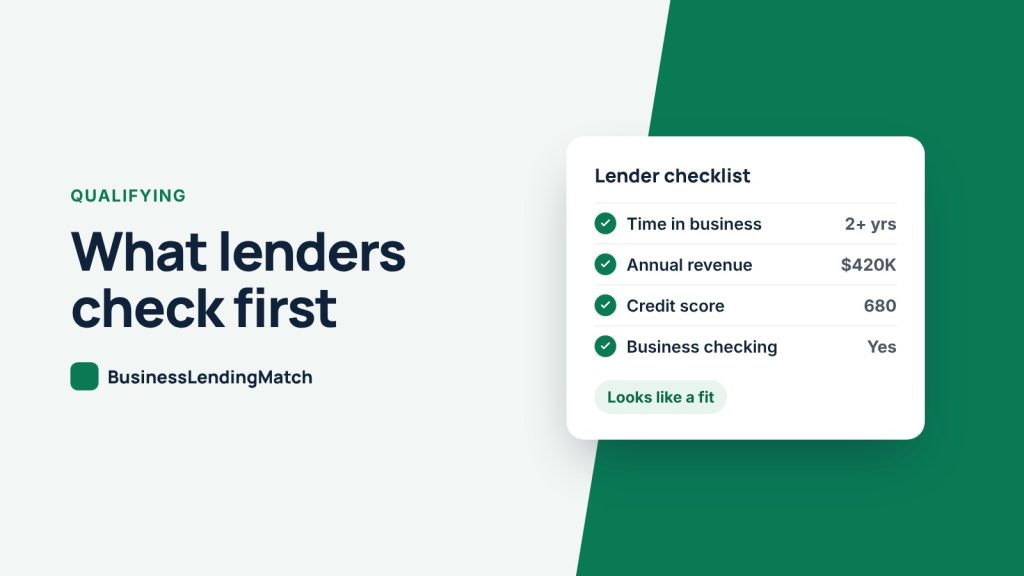
Most small business loans require at least 6 months to 2 years in business, steady annual revenue (often $100K or more), a personal credit score of roughly 600 to 680 depending on the lender, and a business checking account. Bank and SBA loans also look at cash flow, collateral and a personal guarantee. Here is what each requirement means and how to meet it.
Time in business
Lenders count from when your business started operating, not when you registered it. Online lenders often accept 6 months to 1 year. Banks and most SBA 7(a) lenders prefer 2 years so they can see full tax returns. Under 6 months? Look at startup funding options and equipment financing.
Annual revenue
Revenue shows you can make the payment. Online lenders commonly look for $100K to $250K a year, and many check your bank deposits rather than your tax return. Banks care more about profit than top-line sales.
Personal credit score
For most small businesses, the owner’s personal credit is part of the decision. Typical starting points:
| Loan type | Typical credit score |
|---|---|
| SBA 7(a) and bank loans | 650 to 680+ |
| Online term loans and lines of credit | 600 to 650+ |
| Equipment financing | 575 to 650+, depending on the equipment |
| Invoice factoring | Based mostly on your customers’ credit |
| Revenue-based financing | Often 550 and up |
Lower score? See our guide to business loans with bad credit.
Cash flow and existing debt
Banks and SBA lenders measure whether your cash flow covers all your debt payments, including the new one. A common target is a debt service coverage ratio of 1.25, meaning $1.25 of income for every $1 of debt payments. Several open loans or cash advances can lower what you qualify for, so lenders ask about them up front.
Collateral and personal guarantee
Many loans are secured by business assets, the equipment being bought or a general lien on the business. SBA loans require a personal guarantee from anyone who owns 20% or more. Online lenders often take a general lien and a personal guarantee instead of specific collateral.
Background items lenders ask about
Expect questions about recent bankruptcies, open tax liens, past foreclosures and, for SBA loans, certain criminal history. These do not always mean no, but some lenders cannot approve them. Telling the truth early saves you from an application that stalls in underwriting.
Documents
Typical paperwork includes bank statements, tax returns, financial statements, a debt schedule, your EIN and ID. See the full business loan documents checklist.
Frequently asked questions
Can I get a business loan with no revenue?
It is hard. Pre-revenue businesses usually rely on SBA microloans, equipment financing with a down payment, personal assets or investors. Most term lenders need deposits to review.
Do I need collateral for a small business loan?
Not always. Many online loans and lines of credit are unsecured beyond a general lien and personal guarantee. Larger bank and SBA loans usually take collateral when it is available.
Do I need a business bank account?
Almost always. Lenders deposit funds and collect payments there, and many review its statements to verify revenue.
Find out what you qualify for
Instead of guessing which lender’s requirements you meet, tell us about your business once. We match you with the vetted lender whose requirements fit you best. Get a Loan.