
Key takeaways
- Online lenders often approve about 10% to 30% of annual revenue.
- Bank and SBA loans are sized by cash flow: profit must cover the payment with room to spare.
- Equipment and real estate loans are sized mostly by the value of what you are buying.
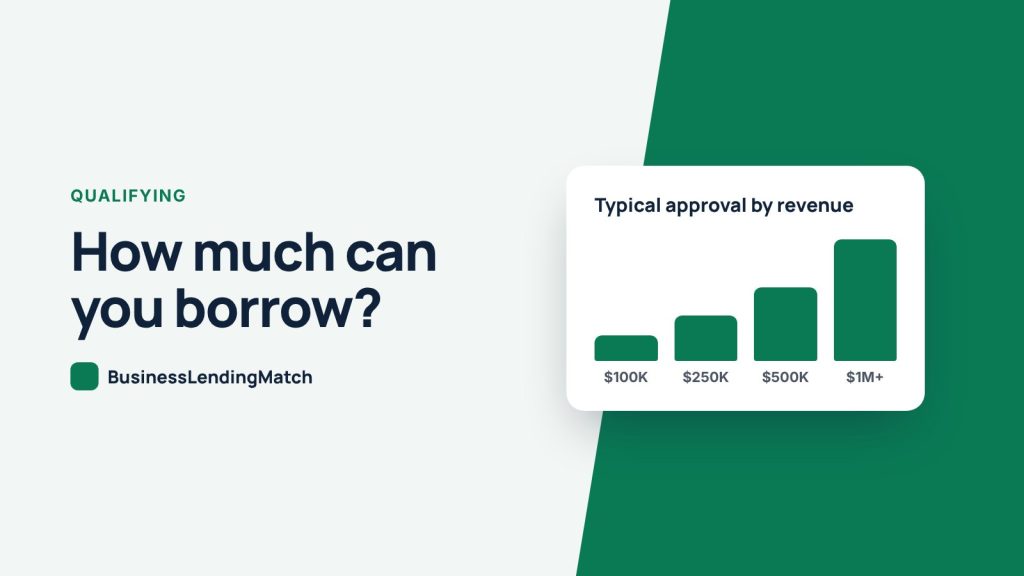
As a rule of thumb, many online lenders will lend roughly 10% to 30% of your annual revenue, while banks and SBA lenders size loans so your yearly cash flow covers all debt payments about 1.25 times. Equipment and real estate loans are based mostly on the asset’s value. Your credit, time in business and existing debt move the number up or down.
Estimates by annual revenue
These ranges are a starting point for unsecured online term loans and lines of credit, not a promise from any lender:
| Annual revenue | Typical approval range |
|---|---|
| $100K to $250K | $10K to $60K |
| $250K to $500K | $25K to $125K |
| $500K to $1M | $50K to $250K |
| $1M to $5M | $100K to $1M+ |
Strong credit and 2+ years in business push you toward the top of the range. Existing loans or cash advances pull you toward the bottom.
How banks and SBA lenders size a loan
Bank and SBA lenders start with cash flow. They take your business’s net income, add back non-cash items such as depreciation and interest, and compare it with all your yearly debt payments. A debt service coverage ratio of 1.25 is a common minimum.
Example: your business has $150,000 a year available for debt payments. Divide by 1.25 and you can support about $120,000 a year in total payments. If you already pay $30,000 a year on other debt, about $90,000 a year is left for the new loan. Over a 10-year SBA 7(a) loan, that can support a loan in the mid six figures, depending on the rate.
Loans sized by what you buy
- Equipment financing: often 80% to 100% of the equipment’s price.
- Commercial real estate: commonly 75% to 90% of the property value, depending on the program.
- Invoice factoring: typically an advance of 70% to 90% of your open invoices.
How to qualify for more
- Pay down or consolidate short-term debt and cash advances first.
- Keep consistent bank balances and avoid overdrafts in the months before you apply.
- File your latest tax return so lenders can count your most recent year.
- Offer collateral or a down payment when you can.
- Apply with a lender that serves businesses your size, so you are not judged by the wrong yardstick.
Frequently asked questions
Can I borrow more than my annual revenue?
Usually only with collateral, such as real estate or equipment, or with an SBA loan backed by strong cash flow.
Does my personal income count?
For SBA and some bank loans, lenders review the owners’ personal finances as part of global cash flow. Online lenders focus mostly on business deposits.
Why did a lender offer less than I asked for?
Usually because of cash flow, existing debt or time in business. A different loan type or lender may approve more.
Get a real number
Rules of thumb only go so far. Tell us your revenue, time in business and what the money is for, and we will match you with the vetted lender most likely to approve the amount you need. Get a Loan.